Product Description
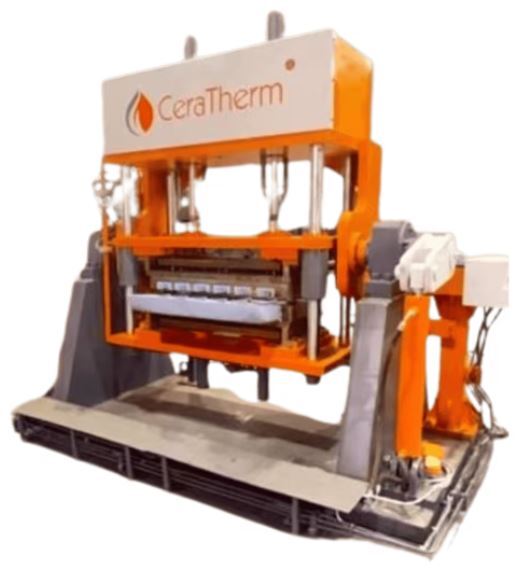
Gravity Die Casting is a permanent mould casting process,where the molten metal is poured from a vessel or ladle intothe mould. The mould cavity fills with no force other thangravity, filling can be controlled by tilting the die. Undercuts,and cavities can be incorporated into the component formwith the use of sand cores. This process gives a better surfacefinish than sand casting as well as better mechanicalproperties, both due to rapid solidification.
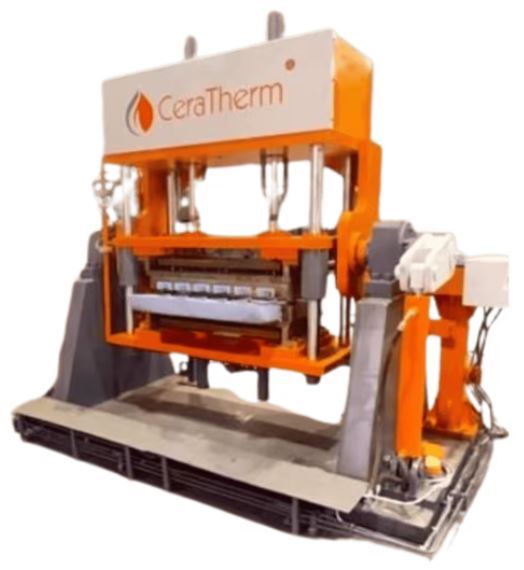
High-Efficiency, Four Die OperationThis gravity die casting machine is engineered for performance, supporting up to four dies and a maximum cycle speed of 120 cycles per hour. Its hydraulic mold opening and pneumatic ejector pins streamline production, while quick die change (under 15 minutes) minimizes downtime. Suitable for aluminum and brass casting, it offers high throughput for growing businesses.
Digital Control and Safety FeaturesExperience intuitive operation with the built-in digital HMI touchscreen. The PLC-controlled system ensures user-friendly settings, process consistency, and accuracy up to 0.3 mm. Integrated safety features include emergency stop, interlock systems, and overheat protection, prioritizing operator safety and machine longevity.
Robust Construction and Easy MaintenanceBuilt on a heavy-duty welded frame, the GDC-4D is designed for durability and low maintenance costs. Automatic grease lubrication and water-cooled molds promote efficient operation, while the paint-coated, compact structure simplifies installation and long-term service in demanding industrial environments.
FAQ's of Gravity Die Casting Machine 4 die:
Q: How does the gravity die casting process work on this machine?
A: The machine uses manual gravity-based pouring, where molten metal is poured into hydraulic-opening dies. The PLC and HMI touch screen control parameters, cycle times, and ejector systems. Four cavities allow multiple castings per cycle, enhancing efficiency for aluminum or brass applications.
Q: What are the main benefits of the GDC-4D gravity die casting machine?
A: The primary benefits are high productivity (up to 120 cycles/hour), quick die change, adjustable cycle speed, precise control (0.3 mm accuracy), low maintenance, and advanced safety features including emergency stop and interlock systems. Its robust construction ensures reliability and longevity in continuous foundry operations.
Q: When should I consider using this machine in my foundry?
A: You should use the GDC-4D when your production requires frequent die changes, rapid cycles, consistent quality, and the ability to cast non-ferrous metals like aluminum or brass efficiently. Its features make it ideal for medium to large-scale foundry setups needing stable, high-volume output.
Q: What is the process of changing dies and how long does it take?
A: The die change process is straightforward, utilizing the hydraulic mold opening and pneumatic ejectors. Operators can switch molds in under 15 minutes, facilitated by the user-friendly tool kit and digital control panel. This efficiency reduces downtime and supports flexible production demands.
Q: What safety measures are included with the GDC-4D machine?
A: For operator and equipment safety, the machine is equipped with an emergency stop button, overheat protection, and an interlock system. These features minimize risks during operation and are complemented by the intuitive HMI, which helps quickly address any issues that arise.
Q: Where is installation service available, and how is the machine shipped?
A: Installation service is optionally available across India via the manufacturer or supplier. The machine is carefully packed on a wooden crate with sea-worthy packaging to ensure safe transit and arrival at your facility.
Q: How does the cooling and lubrication system contribute to machine lifespan?
A: The GDC-4D features automatic grease lubrication and mold water cooling, which reduce wear and maintain optimal thermal conditions. These systems help prevent component overheating and ensure smoother operation, significantly contributing to the machine's long-term durability.
 Chat with us





 Send Inquiry
 Send Inquiry
 Send SMS


